
Privacy for Patios Near Neighbors, Golf Courses, and Lakes
Quick Answer:
An exposed patio doesn’t have to feel like it’s on display. Exterior roller shades can help block direct views from neighboring homes, golf courses, and nearby waterfront areas without permanently closing off the space. Lower the shades when you want more privacy, then raise them to enjoy an open view again. All Pro Shade Concepts helps Arizona homeowners choose shade systems, fabric openness, and installation locations based on where the patio is most exposed. The result depends on viewing angles and lighting, so choosing the right placement is just as important as choosing the fabric.
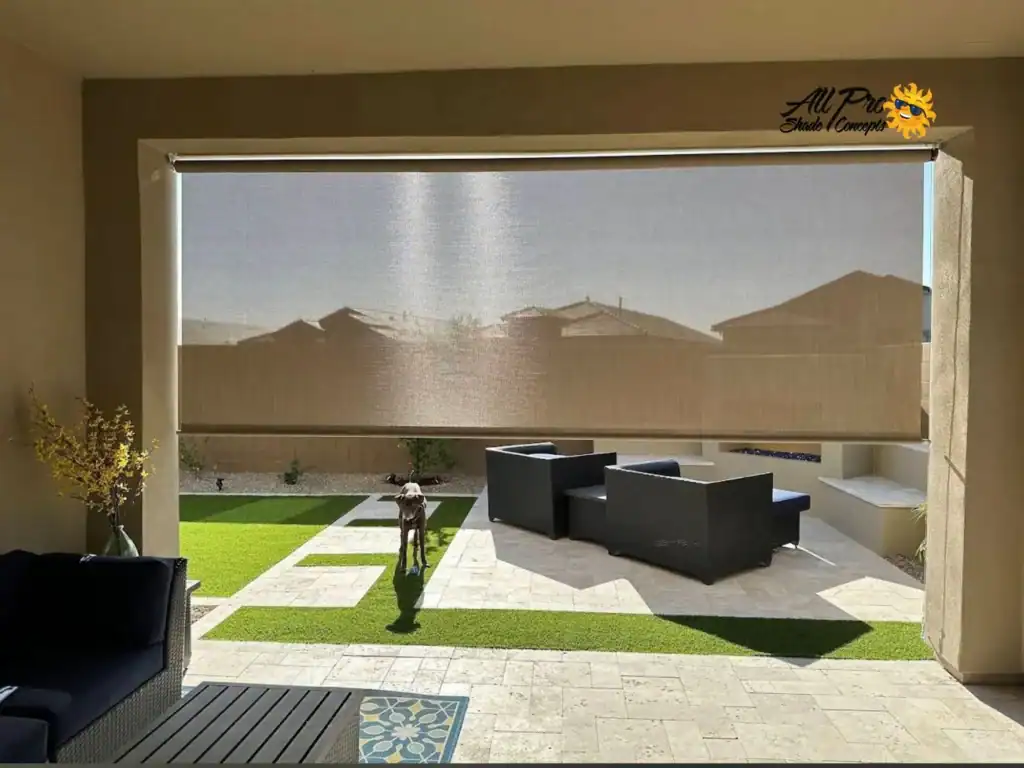
A Backyard Wall Doesn’t Block Every Line of Sight
A block wall may define your property boundary, but it doesn’t shield every angle into your outdoor living area.
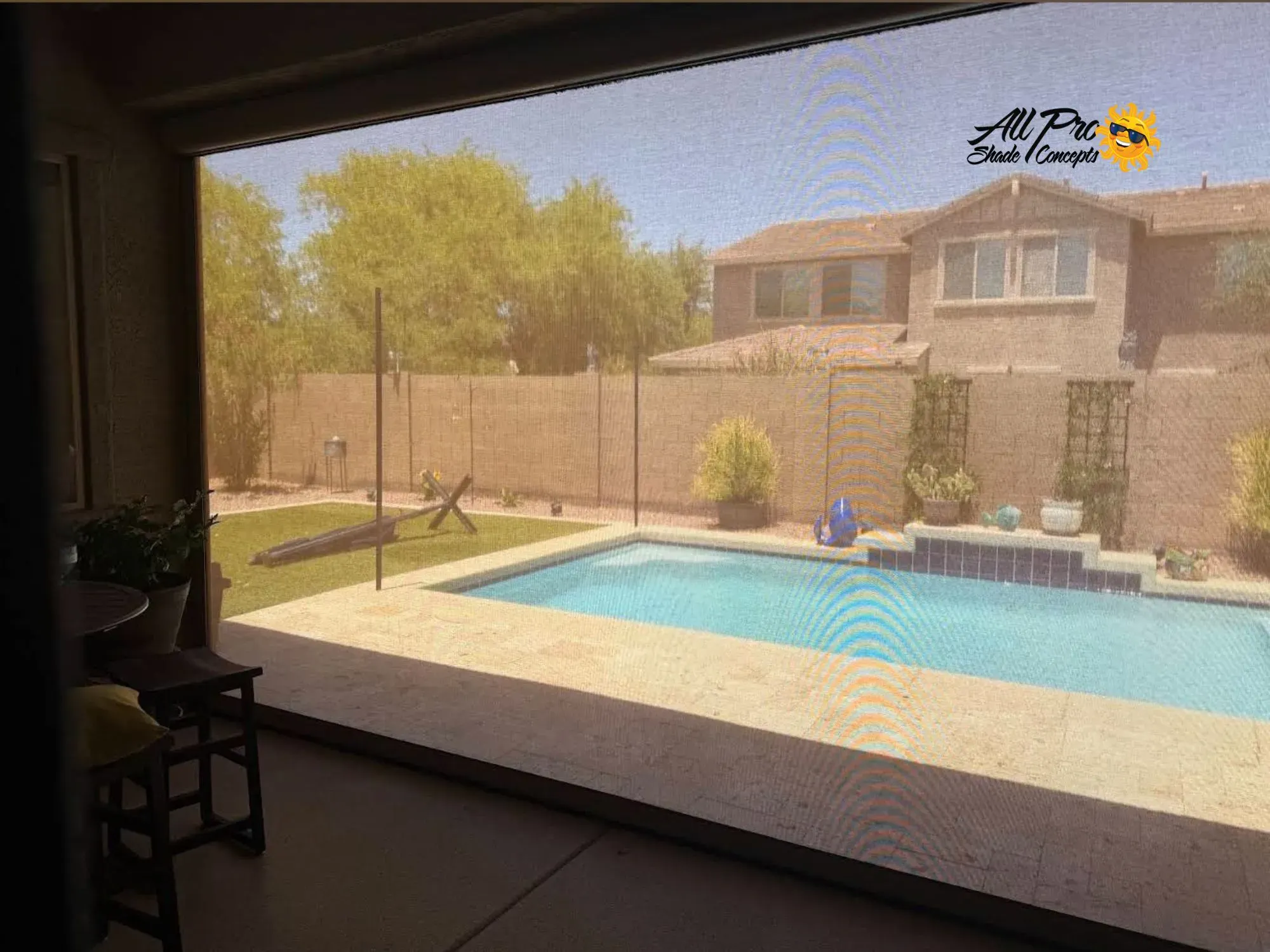
In Metro Phoenix and Tucson neighborhoods with two-story homes, upstairs windows and balconies can overlook covered seating areas even when a block wall surrounds the yard. Patios with multiple open sides can also remain visible from neighboring properties.
Exterior patio shades can reduce that exposure by creating a visual barrier across a covered patio’s open sides.
Placement matters as much as the fabric. A shade along one side of the patio won’t necessarily block a view from an upstairs window.
At All Pro Shade Concepts, we assess those sightlines and the existing structure before recommending where to install the shades.
Privacy Challenges for Golf-Course and Lakefront Homes
Golf-course and lakefront homes often come with the open views homeowners love. But those same sightlines can make a patio feel exposed.
The privacy concern differs depending on the setting:
- Golf-course properties: Golfers and carts move along fairways and nearby paths throughout the day. As they pass, the angle from which someone can see your patio changes.
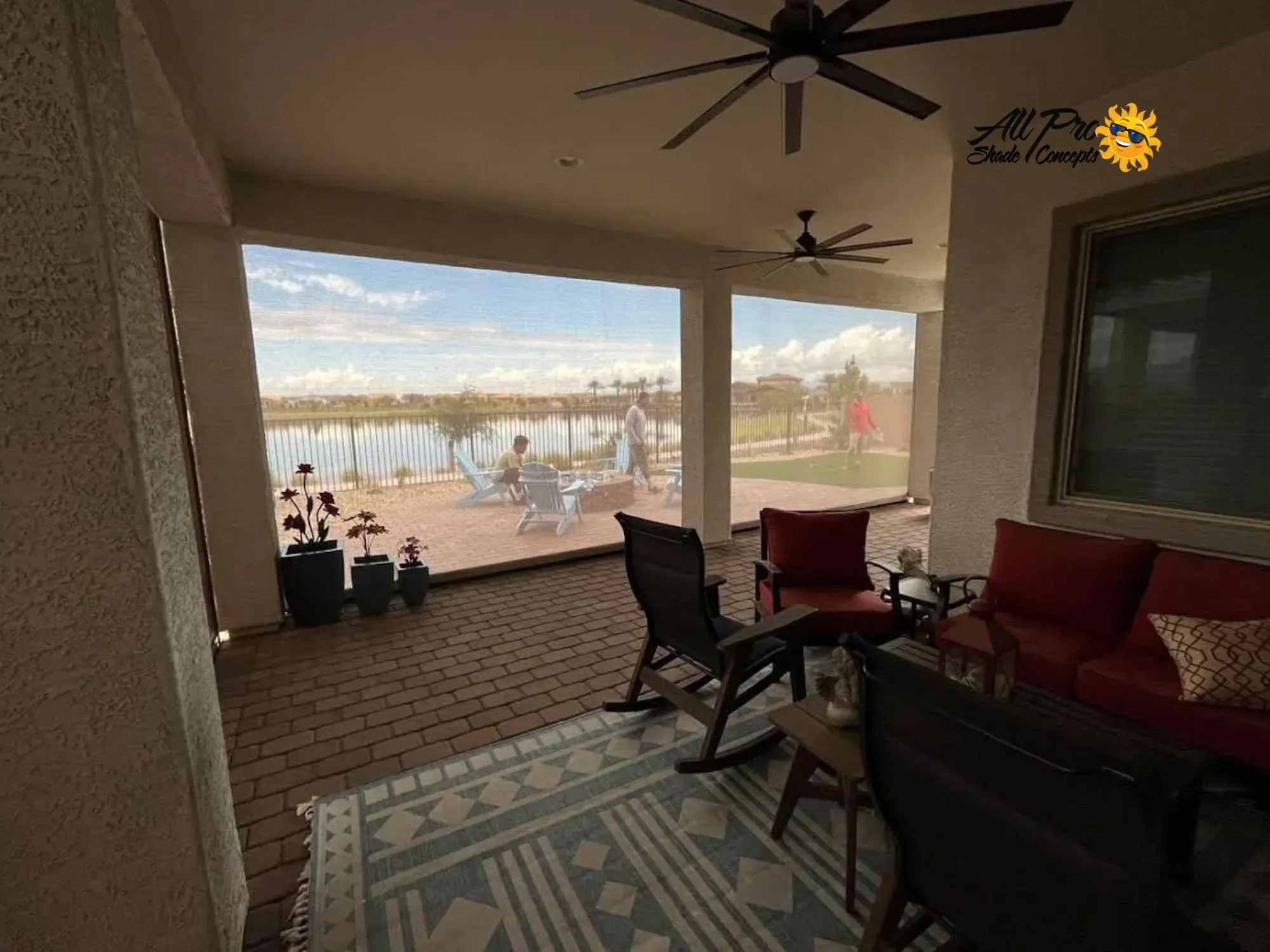
- Waterfront homes: Nearby neighbors, people using shared shoreline paths, and residents across the water may have a clear view of your outdoor seating and dining areas.
The goal isn’t necessarily to close off the patio. It’s to add privacy where you need it while keeping the scenery that made the property appealing in the first place.
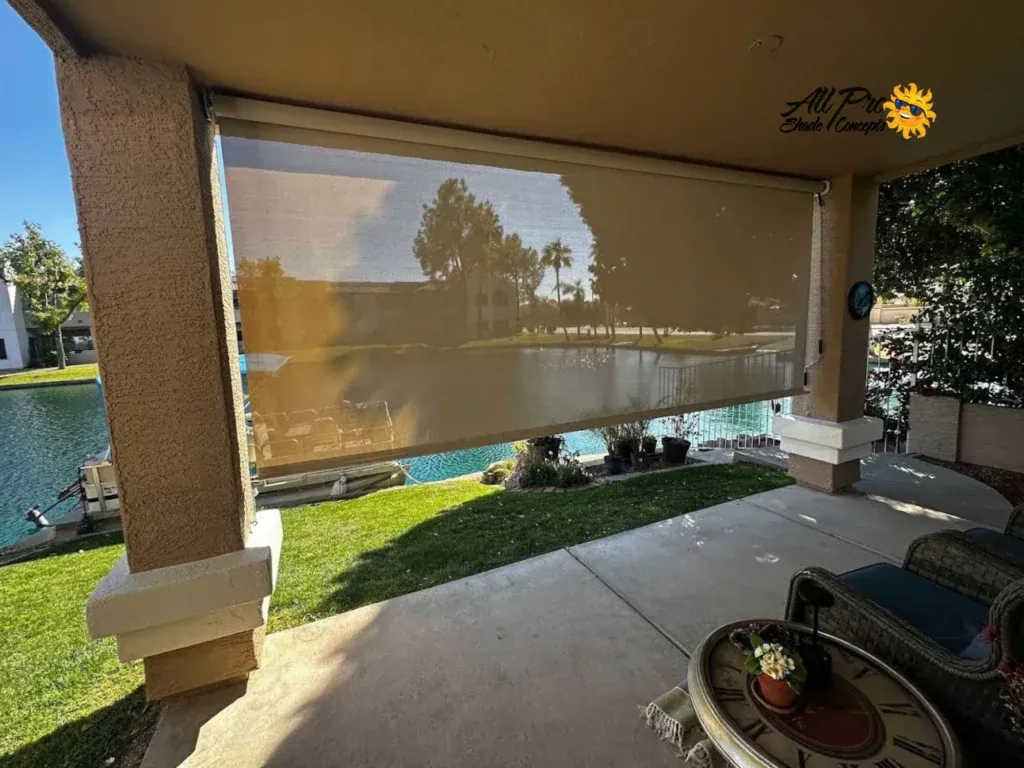
Instead of screening every side, Exterior Drop Shades can cover the openings facing the most activity. Lower them when you want more separation, then retract them when you want the view completely open again.
If your neighborhood has an HOA, check its exterior-modification requirements before finalizing your shade design. All Pro works with Arizona homeowners on shade options that can be submitted for HOA review.
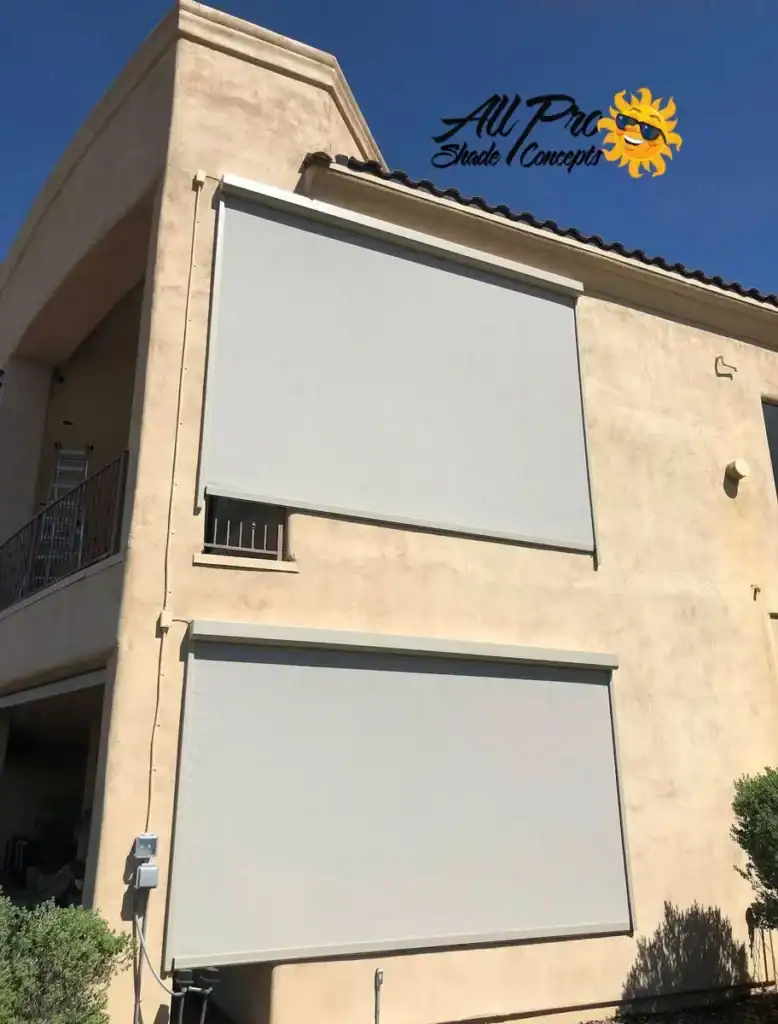
Which Patio Shade System Works Best for Privacy?
The best option depends on your patio layout and how much separation you want from the surrounding area. All Pro Shade Concepts installs several retractable patio shade options:
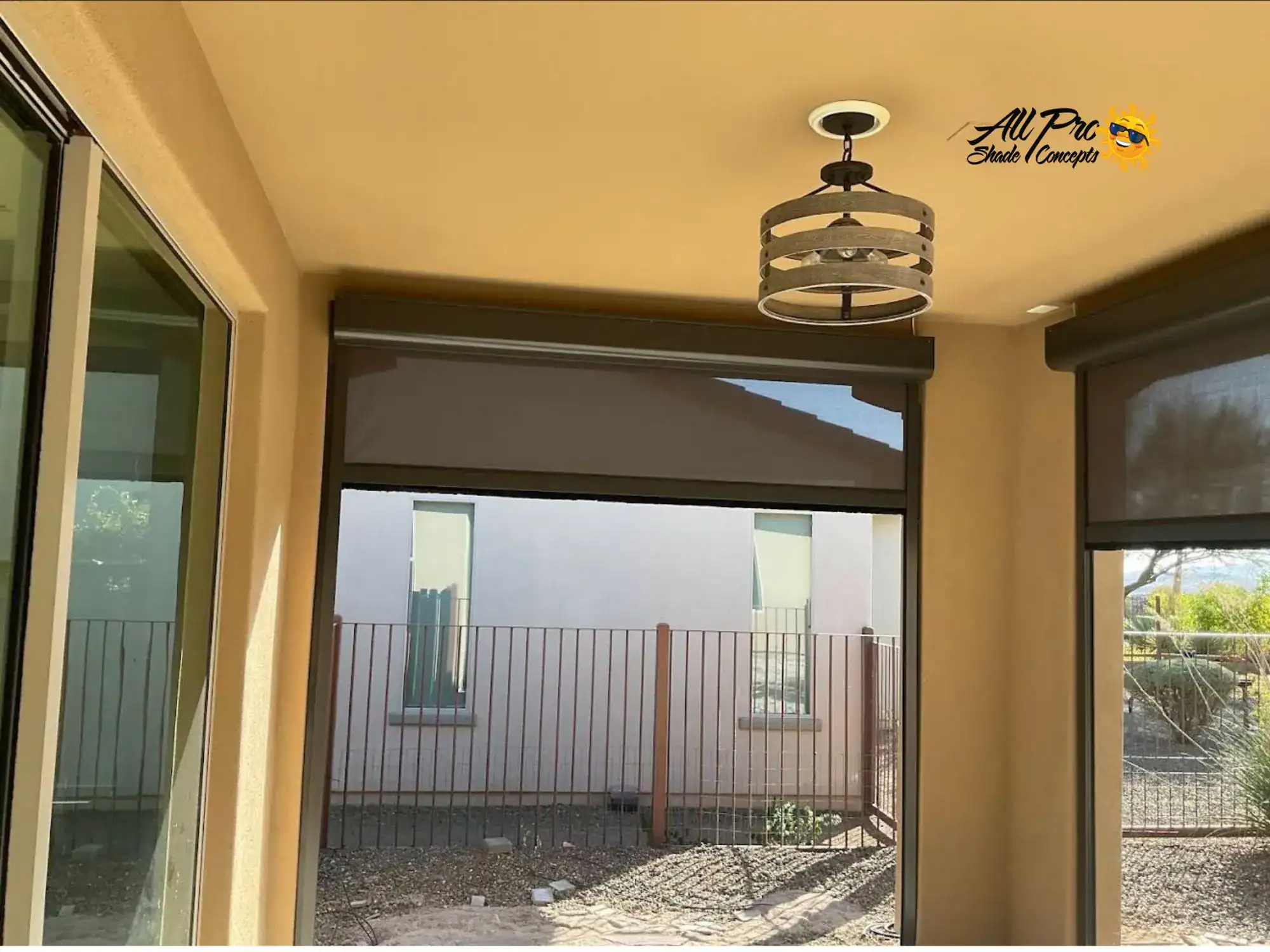
- Sealed Track System: A good fit for covered patios where homeowners want a more enclosed outdoor space. The motorized system holds the fabric within side tracks, providing adjustable privacy while helping reduce insects and blowing debris.
- Cable-Guided Patio Shades: A practical option for patios where homeowners prefer a more open look. Heavy-duty guide cables support the fabric, and manual or motorized operation is available.
- Solar-Powered Motorized Patio Shades: A cable-guided option with Dooya solar motors and remote control. These shades are useful where homeowners want motorized convenience without installing electrical wiring.
When privacy is the priority, fabric choice and shade placement matter just as much as the system itself. Sealed-track shades create a more enclosed feel, while cable-guided shades maintain a more open appearance.
Available fabric colors, openness levels, and frame finishes also give homeowners room to customize the look of their patio.
During a consultation, we assess the patio’s dimensions, mounting locations, and exposed sides to help determine which system works best.
Patio Privacy Shades: What Fabric Openness Means
Choosing the right screen system is only part of the decision. The fabric determines how much you can see through a lowered panel.
Exterior solar fabrics come in different openness levels, which describe how much open space exists within the fabric’s weave. A tighter weave generally makes it harder to see through the screen, while a more open weave allows clearer views outside.
For a patio overlooking a golf course or lake, that difference matters. The goal may be to reduce the feeling of exposure without losing the view that makes the space enjoyable.
| Factor | What Homeowners Should Know |
|---|---|
| Fabric openness | A lower openness percentage generally reduces visibility through the mesh. However, it can also affect how clearly you see outside. |
| UV protection | For example, Phifer SunTex 95 has approximately 5% openness and blocks approximately 95% of UV rays. UV blockage measures sun protection, not the amount of visual privacy. |
| Fabric color | Darker materials can provide clearer outward visibility, although contrast and surrounding light affect how easily others can see inward. |
| Daytime vs. nighttime | Screens may provide greater visual separation during daylight. After dark, lighting inside the covered area can make people and furnishings more visible from outside. |
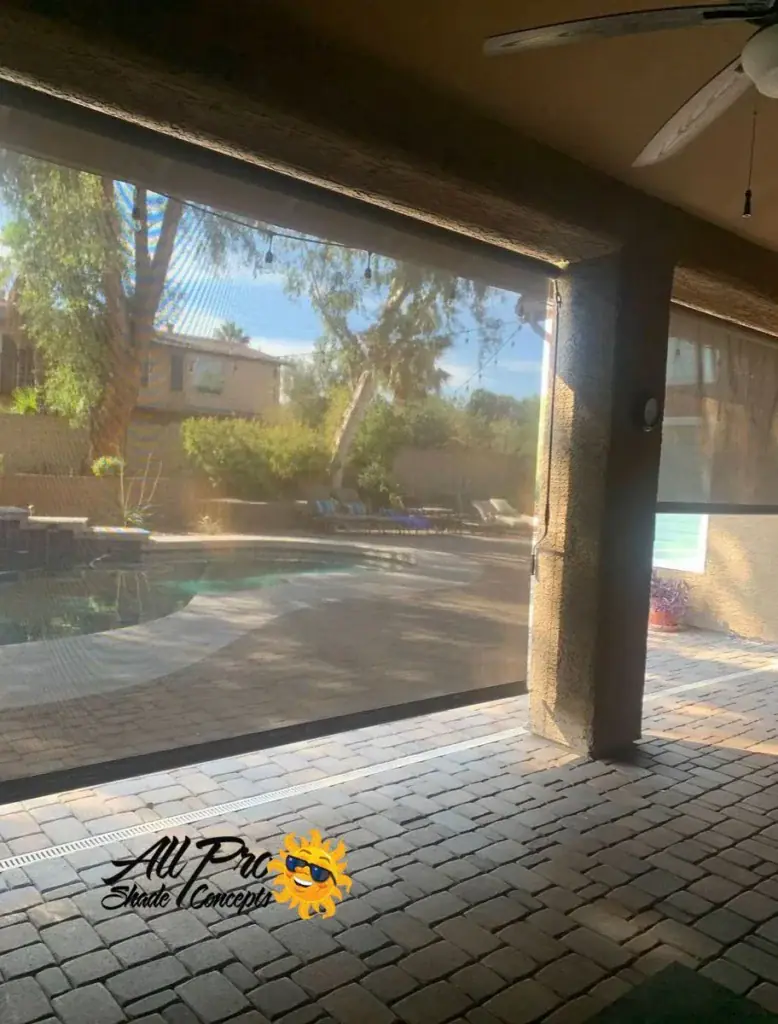
No woven solar screen guarantees one-way privacy under every lighting condition. If nighttime privacy is a priority, mention that during the consultation. Patio lighting and the fabric’s visibility after sunset deserve just as much consideration as daytime conditions.
That’s why fabric selection should reflect how you actually use your outdoor living area. Someone who wants to preserve a lake or golf-course view may choose a more open fabric than a homeowner whose main concern is blocking direct views from nearby windows.
Privacy From the Side, Shade From Above
Patio shades are most useful when the exposure comes through the open sides of a covered patio. If the bigger issue is overhead sun extending beyond the roofline, Retractable Awnings can extend shade over open seating and entertaining areas. Some homes benefit from both: vertical patio shades for side exposure and an awning for overhead coverage.
Find the Right Privacy Solution With All Pro Shade Concepts
A patio gets more use when it feels comfortable for everyday life, from a quiet morning outside to dinner with family or friends. If neighboring windows, passing golfers, or nearby properties leave the space feeling exposed, retractable patio shades can help create more separation without permanently blocking the view.
At All Pro Shade Concepts, we help homeowners choose the right combination of shade systems, fabrics, and placement for their outdoor spaces. We serve Metro Phoenix and Tucson, including Scottsdale, Gilbert, Oro Valley, and surrounding communities.
Request a free, no-pressure consultation to explore patio shade options for your home.
FAQs About Outdoor Shades For Privacy in Arizona
Can outdoor roller screens prevent neighbors from seeing into my patio?
They can significantly reduce direct views through covered patio openings, but privacy depends on screen fabric, placement, lighting, and viewing angle. An upstairs window may still overlook areas that the screens don’t directly block.
Can I still enjoy my lake or golf course view with the screens lowered?
Yes. More open screen fabrics preserve more outward visibility, while tighter weaves provide greater screening. Because the shades retract, you can also raise them whenever you want a completely open view.
Do exterior privacy screens work at night?
They can provide some screening, but nighttime privacy is more difficult when the patio is brightly lit and the area outside is dark. Consider both fabric and lighting if you regularly use the patio after sunset.
What should I consider before installing patio privacy shades?
Start by identifying which sides of your patio feel most exposed and when you usually spend time outside. Opening size, available mounting points, preferred outward visibility, and lighting conditions can all affect the shade design. All Pro Shade Concepts offers consultations to help homeowners compare systems and fabric options before installation.